
Light commercial, 3.5t to 6t
Courier, trade and urban delivery work. The class where the lender pool is widest and terms most closely resemble vehicle finance rather than heavy plant finance.
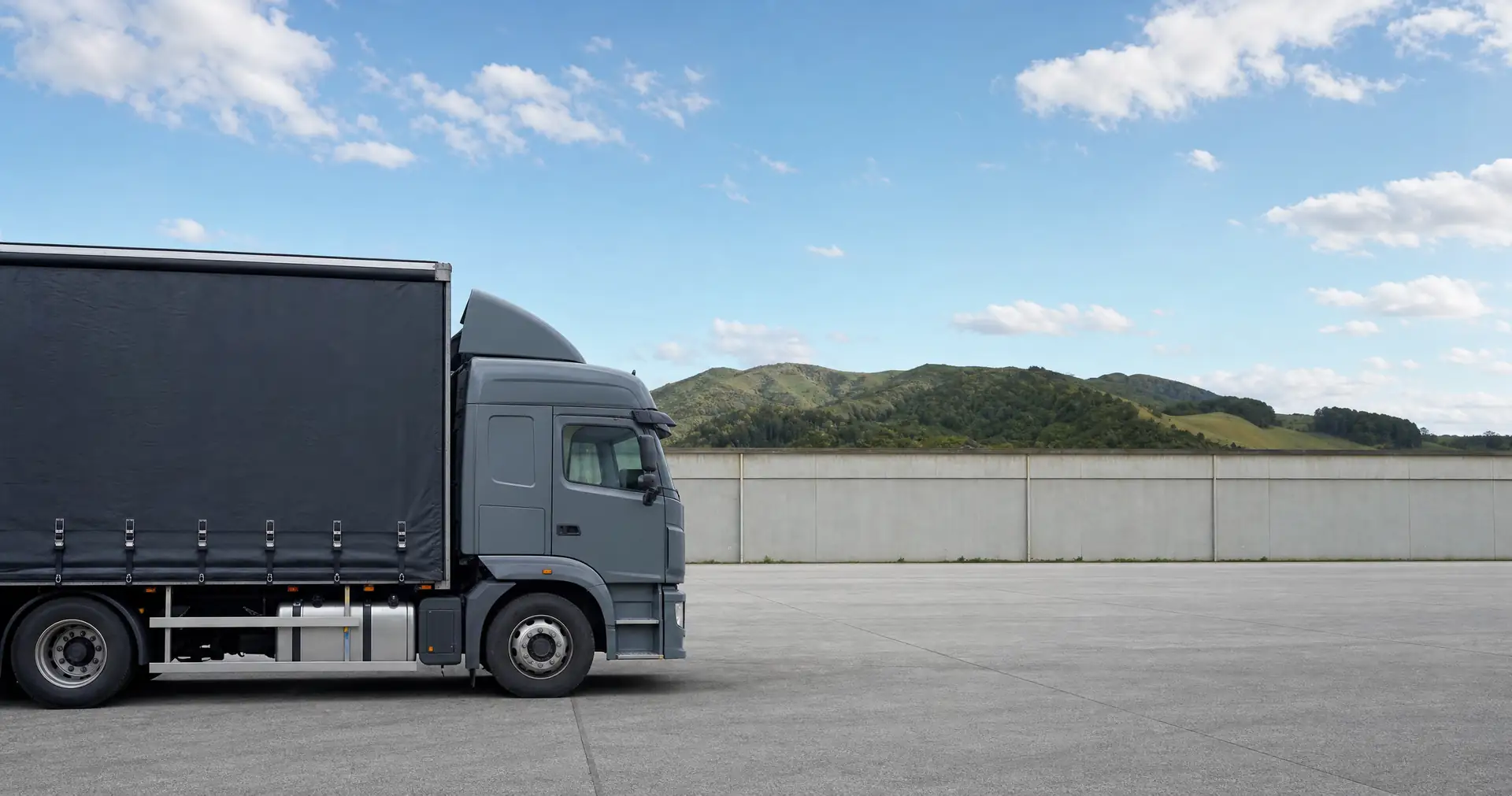
A truck is the most heavily regulated asset on this site, and the costs that decide whether one pays for itself sit almost entirely outside the finance agreement.
Last reviewed 7 September 2026
Indicative repayment
Weekly
$785/week
Indicative only. Not a quote or offer of credit. Actual rates, fees, and repayments depend on the business profile and the lender's decision.
Sending to Prospa
5 years at 10.00% . Prospa will ask a few quick questions, then provide a firm quote and funding if eligible.
Redirecting…
The short version
What it is
Truck finance is a secured facility over an identified vehicle, with the lender registering a security interest on the Personal Property Securities Register. Because the asset is identifiable, registered nationally and has an active resale market, indicative pricing sits below unsecured business lending for the same borrower.
What distinguishes trucks from the rest of the equipment on this site is the regulatory layer sitting on top. Heavy vehicles operate under a certificate of fitness regime rather than a warrant of fitness, most diesel vehicles pay road user charges by distance, an operator carrying goods for hire or reward needs a Transport Service Licence, and drivers need the appropriate class of licence. None of that is covered by a finance agreement and all of it is a cost of running the vehicle.
The practical consequence is that the finance figure alone answers very little. An operator working out whether a truck pays for itself is comparing the total of the repayment, the road user charges for the expected distance, the certificate of fitness cycle, insurance, tyres, servicing and the driver against what the work pays. The repayment is frequently the smaller half of that sum, which is why this page spends as much space on what the finance excludes as on what it covers.
Common class
8t to 30t GVM
Indicative rate band
8% to 15% p.a.
Inspection regime
Certificate of fitness
Registered on
PPSR
By class
Indicative New Zealand purchase bands, illustrative only. Age, kilometres, body specification, certification status and whether the vehicle is new, near-new or an import all move these considerably. A dealer quote decides an actual purchase.
Courier, trade and urban delivery work. The class where the lender pool is widest and terms most closely resemble vehicle finance rather than heavy plant finance.
Regional distribution and general freight. Deep used market, and the class most commonly bought by owner-operators taking a first vehicle.
Bulk, waste, concrete and general heavy freight. Body type drives value as much as the chassis, and specialised bodies narrow the resale pool.
Line-haul and heavy combination work. Large individual amounts, and lenders commonly ask about the contract or freight lane behind the purchase.
Frequently fitted at purchase and financed on the same schedule as the chassis. Retro-fitting to an existing vehicle is normally a separate and shorter facility.
Civil, quarry and waste work. Values hold reasonably well because demand is broad, and the hydraulics are assessed alongside the chassis.
Chilled and frozen distribution. The refrigeration unit has its own service life and is often assessed separately from the vehicle carrying it.
Truck-mounted lifting equipment with its own certification cycle. Financed with the vehicle where fitted at purchase, and inspected on its own schedule thereafter.
The common case
The costs outside the agreement
Most diesel vehicles in New Zealand pay road user charges by distance and weight rather than at the pump, and on a working heavy vehicle that charge is a substantial recurring cost that no finance agreement covers. Certificate of fitness inspections run on a set cycle for heavy vehicles, a Transport Service Licence is required to carry goods for hire or reward, and drivers need the appropriate licence class and endorsements. NZTA publishes the current rates and requirements, and an operator working out whether a purchase carries itself is adding all of that to the repayment rather than looking at the repayment alone.
Indicative bands
Indicative bands only, and not an offer of credit. Lenders assess the transport business first and the vehicle second, so an established freight book commonly moves these more than the truck does.
| Vehicle age at purchase | Typical maximum term | Deposit commonly sought | Notes |
|---|---|---|---|
| New | 60 months | 0% to 10% | Longest terms and the widest lender pool. Dealer programmes are strong here and commonly competitive with independents. |
| 1 to 4 years | 48 to 60 months | 0% to 15% | The best value band. Certification history and service records carry real weight. |
| 5 to 8 years | 36 to 48 months | 10% to 20% | Terms set against the age the vehicle reaches at the end. Body condition is assessed separately from the chassis. |
| 9 to 12 years | 24 to 36 months | 20% or more | A narrower pool of lenders. Certification status at purchase matters more here than anywhere else. |
| Over 12 years | Case by case | Often 30%+ | Frequently declined as asset finance and funded on an unsecured facility instead, at unsecured pricing. |
Indicative New Zealand market bands for truck finance by vehicle age. Illustrative, not an offer.
The alternatives
Operators prioritising control of the fleet and long-run cost typically finance. Operators prioritising a known cost per month with no maintenance exposure typically take a full-service lease. The right answer follows the freight book.
| Feature | Hire purchase | Finance lease | Full-service lease | Subcontract the work |
|---|---|---|---|---|
| Who owns it | The operator | The financier | The lessor | The subcontractor |
| Maintenance | The operator | The operator | Commonly included | Not applicable |
| Road user charges | The operator | The operator | Usually the operator | The subcontractor |
| Cost when idle | Full payment | Full payment | Full payment | None |
| Resale exposure | Yes | At the residual | No | No |
| Fits when | The lane is steady and long-term | Replacement runs on a cycle | Maintenance risk is unwelcome | Volume is variable or seasonal |
A full-service lease bundles maintenance into one figure, which is easier to budget and not automatically cheaper. The comparison is between the bundled rate and the honest total of a financed vehicle including servicing and downtime, and that total is specific to the operator.
The process
Written as an observation of what commonly happens rather than as instructions. Every lender differs, and none of this is a guarantee of an outcome.
01
Same day once a quote exists
A quote naming the make, model, year, VIN, odometer reading and the body or equipment fitted is normally what opens the file. Where a body is being built or fitted after purchase, lenders commonly want the body quote at the same time so the whole package sits on one schedule.
Documents commonly required
02
2 to 5 working days
Trading history carries more weight than the vehicle. Twelve months of bank statements is the common request, with financial statements added above larger amounts. Where the truck is being bought against a named contract or a specific freight lane, lenders commonly ask about it because it is a visible repayment source.
Documents commonly required
03
Same day to 2 working days
A PPSR search runs on the vehicle, and on a private sale it is the step that matters most. Lenders commonly also want to see current certificate of fitness status, because a vehicle that cannot be certified is not a vehicle that can be worked or easily resold.
Documents commonly required
04
1 to 3 working days after acceptance
The financier commonly pays the seller directly and registers its security interest on the PPSR. Registration and any change of ownership are completed separately through the usual channels, and the first payment normally falls a month after settlement.
Documents commonly required
Insurance on a commercial vehicle is a condition rather than an option, and cover for the body and any fitted equipment is worth confirming separately from cover for the chassis.
Worked scenarios
Illustrative scenarios on stated assumptions. The figures are indicative and are produced by the calculator on this page rather than quoted by any lender.
Three years trading, moving from vans to a rigid
The operator has outgrown two vans on a growing distribution round and is quoted $118,000 plus GST for a three-year-old 8 tonne curtainsider.
On these assumptions a 60-month hire purchase at an indicative 10% carries a repayment near $570 a week. The vans being displaced were costing more than that between them once running costs were counted, which is the comparison that decides it. Road user charges on the new vehicle are higher than on the vans and are budgeted separately from the repayment.
Indicative figures
Nine years trading, adding a prime mover against a contract
A two-year cartage contract requires an additional unit. A new prime mover is quoted at $295,000 plus GST, with the trailer financed separately.
In this scenario the contract is the reason the application is straightforward, because it gives the lender a visible repayment source with a defined term. The point the operator checks before signing is what happens at the end of the contract, since the finance runs five years and the contract runs two, and the vehicle has to earn for three years beyond it.
Indicative figures
First vehicle, subcontracting to a larger carrier
The driver is buying a seven-year-old 12 tonne rigid at $82,000 plus GST to subcontract to an established freight company.
The business has no trading history, so the application rests on the driver’s own position and on the subcontract arrangement. In this scenario a deposit is sought and the term is capped at 36 months by the vehicle’s age. At an indicative 13% the weekly figure lands near $600, and the honest sum is that figure plus road user charges, certificate of fitness, insurance and tyres against the subcontract rate.
Indicative figures
If it goes wrong
Asset finance is secured, and the consequence of default differs from an unsecured loan. Set out here as fact rather than as a warning.
The financier registered its interest on the PPSR at settlement and has a defined statutory route to take possession under the Personal Property Securities Act 1999. A registered vehicle is among the easier assets to locate and recover.
What happens:The truck is recovered and the operator loses the capacity it was carrying.
The vehicle is sold and the proceeds applied to the debt. Where the sale raises less than the balance owing, the difference commonly remains payable by the business and by any guarantor. Specialised bodies narrow the buyer pool and widen that gap relative to a general-purpose vehicle.
What happens:A residual debt survives the loss of the asset.
A vehicle out of certification is worth materially less than the same vehicle in certification, because a buyer inherits the cost of bringing it back. Deferred maintenance during a period of financial pressure therefore compounds the shortfall it was meant to avoid.
What happens:Deferred maintenance widens the gap it was intended to close.
Where a contract is lost or freight volumes fall, lenders are commonly willing to discuss restructuring before arrears build. A conversation held early has more options available to it than one held late.
Honest assessment
The market
Editorial only. These are the kinds of lender active in New Zealand commercial vehicle finance, listed to describe the market rather than to recommend any of them. We hold no relationship with the lenders named here.
Best for established fleets
The major banks write commercial vehicle finance at typically the sharpest indicative pricing and the slowest pace. Most useful for operators with financial statements and an existing relationship.
Best for used and older vehicles
Non-bank financiers who assess the vehicle as closely as the borrower, commonly more flexible on age and specification than a bank, at an indicative rate above bank pricing.
Best for new vehicle purchases
Truck dealers and manufacturers frequently run finance attached to new stock, sometimes with maintenance bundled. Worth comparing against an independent quote rather than accepted on convenience.
Best for known monthly cost
Not lenders in the same sense. A bundled lease covering the vehicle and its maintenance for a fixed monthly figure, which suits operators who would rather not carry maintenance risk.
Names are deliberately generic. A comparison of specific lenders would need current pricing we cannot substantiate, and publishing it would be a claim rather than information.
Test the maths
Pre-filled with a medium rigid over five years. Remember that road user charges, certification, insurance and the driver sit outside this figure. Indicative only, and not a quote or offer of credit.
Indicative repayment
Weekly
$785/week
Indicative only. Not a quote or offer of credit. Actual rates, fees, and repayments depend on the business profile and the lender's decision.
Sending to Prospa
5 years at 10.00% . Prospa will ask a few quick questions, then provide a firm quote and funding if eligible.
Redirecting…
References
The published source for the road user charge obligations described on this page.
The published source for the heavy vehicle inspection regime referred to here.
The published source for the licensing requirement described in the costs section.
The register searched before a used commercial vehicle purchase.
The statutory basis for the enforcement route set out in the default section.
The published source for the depreciation treatment referred to on this page.
FAQ
Truck finance is a secured facility taken over a specific commercial vehicle, with the truck itself carrying the security rather than a property charge. The lender registers its interest on the Personal Property Securities Register and the operator has use of the vehicle from settlement. Indicative pricing generally sits below unsecured business lending because the security is identifiable and resaleable.
Operators commonly finance between $45,000 and $350,000, spanning light commercials through to prime movers. The figures on this page are indicative bands rather than quotes. Body specification moves the total as much as the chassis does, and both are commonly financed on the same schedule where they are bought together.
No. Most diesel vehicles pay road user charges by distance and weight, and that cost sits entirely outside the finance agreement. On a working heavy vehicle it is a substantial recurring expense that frequently exceeds the repayment, which is why an operator assessing whether a truck pays for itself adds it to the finance figure rather than looking at the repayment alone.
Commonly yes, where they are bought together. A curtainsider, tipper body, refrigeration unit or hiab fitted at purchase is normally listed on the same schedule as the cab and chassis and financed as one facility. Retro-fitting a body to a vehicle already owned is usually a separate and shorter facility.
Terms of 36 to 60 months cover most New Zealand commercial vehicle finance. The ceiling is usually set by the age the vehicle reaches at the end of the term rather than its age at purchase, and heavy vehicles face certification requirements that make lenders more conservative about age than they are on static plant.
Not always. Nil-deposit facilities are commonly available on newer vehicles for operators with an established trading history. Deposits are more often sought on older vehicles, on highly specialised bodies with a narrow resale pool, and on businesses trading under two years. A trade-in frequently serves as the deposit.
It is harder and it happens. The application usually rests on the driver’s own position and on whatever subcontract arrangement sits behind the purchase, and a deposit or personal guarantee is commonly sought. Where there is no history and no arrangement, asset finance on the vehicle alone is rarely available.
Because a vehicle that cannot be certified cannot be worked and is much harder to resell. Certification status is therefore both an operating question and a security question, and lenders commonly want to see current status before settlement on a used purchase.
A security interest registered on the Personal Property Securities Register attaches to the vehicle rather than to the person selling it. A truck sold privately with finance still owing can therefore be recovered from a buyer who paid the full price in good faith. Used commercial vehicles change hands privately often enough that the search is standard practice.
Not automatically. A full-service lease bundles the vehicle and its maintenance into one figure, which is easier to budget against and removes maintenance risk. Whether it costs less depends on the operator’s own maintenance costs and downtime, and the honest comparison is the bundled rate against the full cost of a financed vehicle including servicing.
The outstanding balance is normally settled from the sale or trade value, and any surplus becomes the deposit on a replacement. Where the value does not clear the balance, the shortfall is either paid or, with some lenders, rolled into the new agreement. Depreciation is front-loaded, so a shortfall is more likely early in a term.
It commonly costs more than it saves. A vehicle out of certification is worth materially less than the same vehicle in certification, because a buyer inherits the cost of restoring it. Deferred maintenance during a period of pressure therefore widens the shortfall it was intended to avoid, on top of the operating risk it creates.
Related
Trailer finance
Usually a separate facility, and often bought in the same year.
Read onForklift finance
The other half of most freight operations, financed the same way.
Read onTransport equipment finance
How New Zealand freight and logistics operators approach equipment as a sector.
Read onWhat equipment lenders assess
What a transport application needs, and why contracts help.
Read onPPSR checks on used plant
What a search shows before a private vehicle purchase.
Read onAll equipment finance guides
Every machine class covered on this site.
Read onDisclaimer
Financing a machine is a commitment that runs for years, and the repayments come out of the same operating cash flow as everything else. Modelling the weekly and monthly cost against the working-capital position before committing is what this site is built for. Borrowing at a level that stays comfortable through a quiet quarter, rather than only through a strong one, is widely regarded as the safer frame.
What this site is
A calculator and information tool. Not a lender, not a broker, not a registered financial adviser. Nothing here is personalised financial advice.
What the figures show
Modelled estimates based on the inputs shown. Not a quote. Not an offer of credit. Not a guarantee of approval, rate or fees.
What the lender decides
Final rates, fees, and approval are set by the lender after a CCCFA-appropriate assessment of the applicant's circumstances and credit decision.
Commercial disclosure
Equipmentfinance.org.nz earns a commission from Prospa when a visitor applies through this site and their application is approved. The commission is paid by Prospa, not by the borrower, and it does not influence the rate Prospa offers. Full disclosure on the partner page.
Tax, GST, and accountant framing
Tax-treatment statements (GST claim timing, interest deductibility, depreciation rates) are general in nature and subject to the accountant's confirmation on the specific business position. For material amounts, professional advice from a registered financial adviser or chartered accountant is widely regarded as the safer frame.