
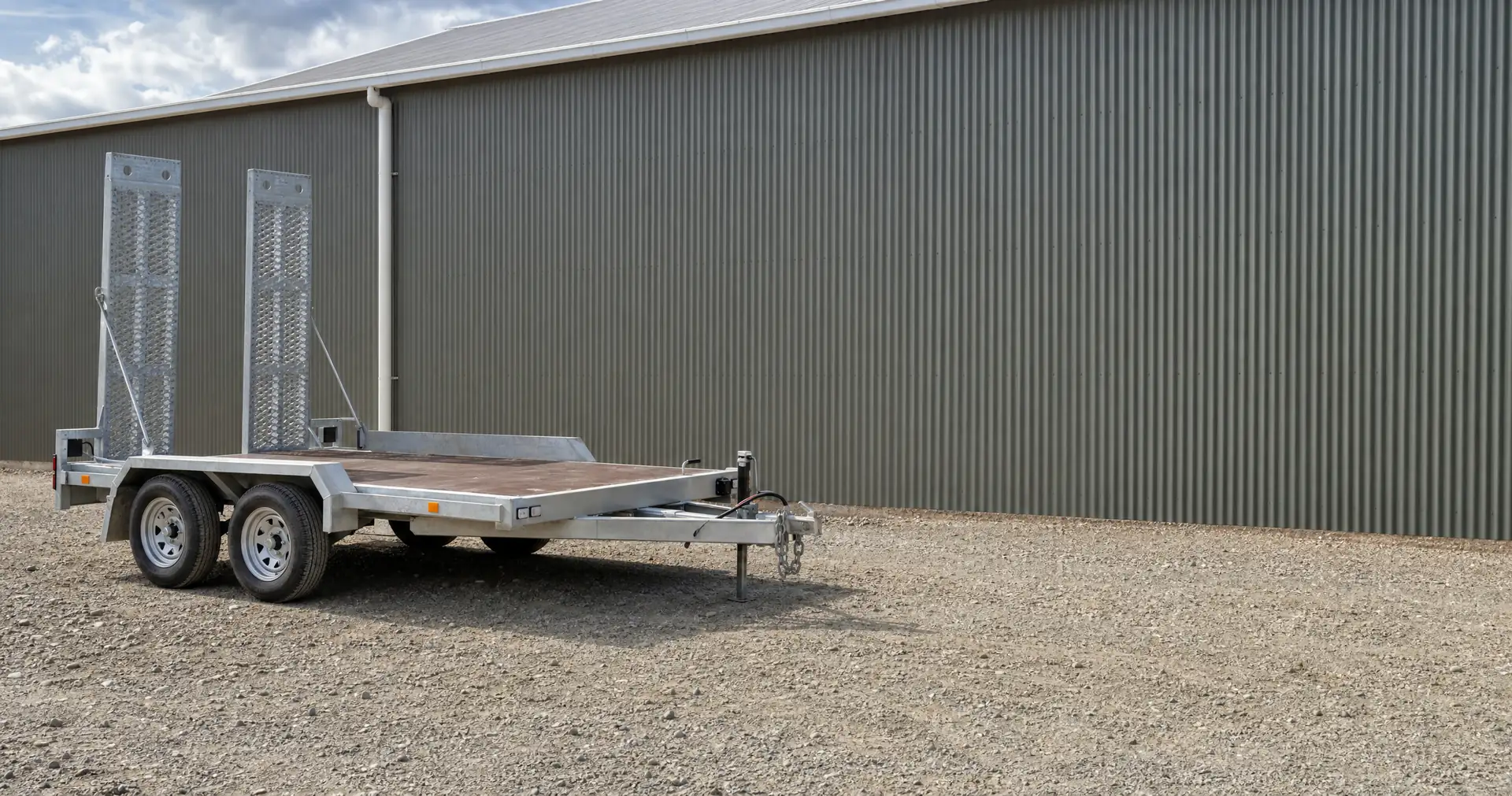
Tandem-axle plant trailer
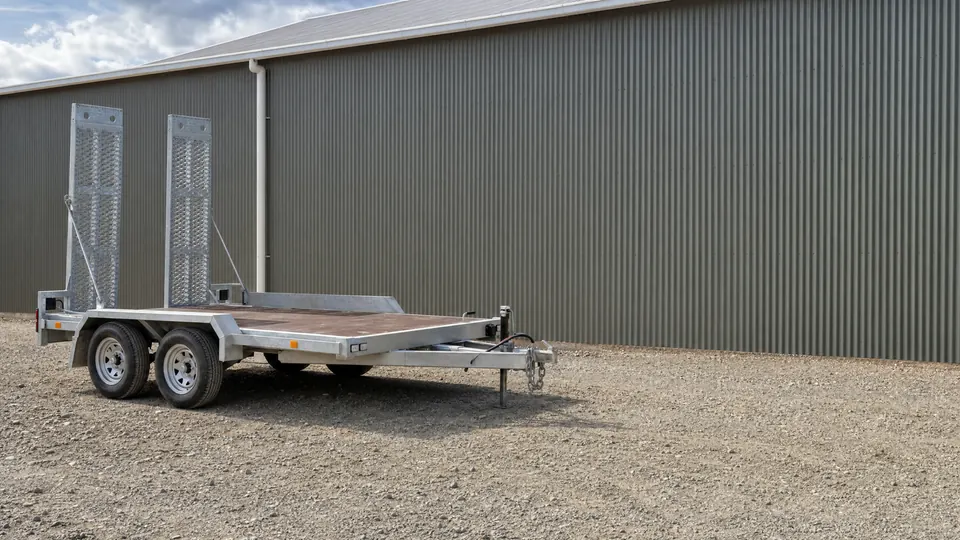
Behind a ute, carrying a mini-excavator or a mower. Often below the minimum a specialist asset financier will write, in which case a general business facility takes it instead.
A trailer has no engine, no hour meter and very little to go wrong, which is why it holds value longer than almost anything else on a transport or contracting yard.
Last reviewed 7 September 2026
Indicative repayment
Weekly
$268/week
Indicative only. Not a quote or offer of credit. Actual rates, fees, and repayments depend on the business profile and the lender's decision.
Sending to Prospa
4 years at 11.00% . Prospa will ask a few quick questions, then provide a firm quote and funding if eligible.
Redirecting…
The short version
What it is
Trailer finance is a secured facility over an identified unit, with the lender registering a security interest on the Personal Property Securities Register. The structure is identical to any other equipment facility. What differs is the asset, because a trailer has no engine, no transmission and no hour meter, and the things that wear out on it are relatively cheap to replace.
That has a direct effect on the finance. A twelve-year-old trailer with a sound chassis and recent brake work is a normal purchase in a way that a twelve-year-old truck is not, and lenders reflect that in the terms they will run. It also means the resale market stays liquid for far longer, which is what makes the security worth something at the end of a long term rather than only at the start.
The complication specific to trailers is how they are bought. Private sales are the norm rather than the exception, and a security interest registered against a trailer follows the unit rather than the person selling it. A buyer who pays in full for a trailer with finance owing on it can lose it. The search is inexpensive, takes minutes, and is the step that matters most on this page.
Common amount
$25k to $70k
Indicative rate band
9% to 16% p.a.
Moving parts
Axles, brakes, lights
Registered on
PPSR
By type
Indicative New Zealand purchase bands, illustrative only. Build quality, axle configuration, braking, certification status and age all move these considerably. A quote for a specific unit decides an actual purchase.
Behind a ute, carrying a mini-excavator or a mower. Often below the minimum a specialist asset financier will write, in which case a general business facility takes it instead.
Landscaping, civil and rural work. Hydraulics are the part that wears, and their condition is assessed separately from the chassis on a used purchase.
General freight and machinery cartage. The widest resale market of any trailer type, which supports the longest terms available in this class.
Line-haul and regional freight. Curtains and rear doors wear before the chassis does and are commonly replaced mid-life without affecting the finance.
Chilled and frozen freight. The refrigeration unit has its own service life and is often assessed and sometimes financed separately from the trailer carrying it.
Fuel, milk and dry bulk. Certification and compliance requirements are specific to what is carried, and those costs sit outside the finance.
Moving plant between sites. Bought most often by contractors rather than freight operators, and frequently financed alongside the machine being carried.
Vehicle transport and livestock movement. Steady demand and simple construction keep values reasonably stable across long ownership periods.
The common case
The small-amount problem
On most equipment on this site the rate is the number worth negotiating. On trailers it frequently is not, because the amounts are small enough that fixed costs dominate. An establishment fee of a few hundred dollars on a $15,000 facility is a meaningful share of the total cost, and it does not shrink when the rate does.
The practical consequence is that comparing two trailer finance offers on their headline rates alone can point at the more expensive one. The comparison that means something is the total of all payments plus every fee, against the same total from the other offer, and on small amounts those two orderings genuinely differ.
The other consequence is that very small trailers often fall below the minimum a specialist asset financier will write at all. Below roughly $10,000 the facility commonly moves to a general business loan or a business credit facility, which prices as unsecured lending rather than as asset finance. That is a real step up in rate, and it is worth knowing before assuming a small purchase will attract asset finance pricing.
The register
A security interest registered on the Personal Property Securities Register attaches to the trailer, not to the person selling it. A unit sold privately with finance still owing can be recovered from a buyer who paid the full asking price in good faith and had no idea. Trailers change hands privately more often than any other equipment class covered on this site, and they frequently carry no distinguishing registration a casual buyer would think to check. A search against the chassis or VIN number costs very little and takes minutes, and the Companies Office publishes the current fee.
Indicative bands
Indicative bands only, and not an offer of credit. Trailers age unusually well, and these bands are more generous than the equivalent table on any powered machine for that reason.
| Trailer age at purchase | Typical maximum term | Deposit commonly sought | Notes |
|---|---|---|---|
| New | 60 months | 0% to 10% | Longest terms available. Builder reputation carries weight, because build quality drives how the unit ages. |
| 1 to 5 years | 48 to 60 months | 0% to 15% | Treated close to new by lenders generally, where certification is current and the chassis is sound. |
| 6 to 10 years | 36 to 48 months | 10% to 20% | A normal purchase in this class. Brakes, axles and lights are assessed rather than the age itself. |
| 11 to 15 years | 24 to 36 months | 20% or more | Still financed where the chassis is straight and certification is current. Terms set against remaining life. |
| Over 15 years | Case by case | Often 30%+ | Some units still work well at this age. The lender pool narrows and unsecured funding becomes the common alternative. |
Indicative New Zealand market bands for trailer finance by age. Illustrative, not an offer.
The process
Written as an observation of what commonly happens rather than as instructions. Every lender differs, and none of this is a guarantee of an outcome.
01
Same day
A quote or a private seller’s details naming the builder, type, year, chassis or VIN number and axle configuration is what opens the file. On a private sale the seller’s identification and evidence of ownership matter more than on a dealer purchase.
Documents commonly required
02
Same day
A PPSR search against the chassis or VIN number is standard, and on a private sale it is the step that carries the most consequence. Where an existing interest is found, the usual path is for the seller’s finance to be settled from the purchase price before ownership transfers.
Documents commonly required
03
1 to 3 working days
Amounts in this class are small enough that assessment is commonly lighter than on larger plant. Twelve months of bank statements and the NZBN cover most applications, with financial statements requested only at the upper end of the range.
Documents commonly required
04
1 to 2 working days after acceptance
The financier commonly pays the seller directly and registers its own security interest. On a private sale, payment routed through the financier rather than directly between the parties is the arrangement that protects the buyer, because it lets any existing interest be cleared at the same moment.
Documents commonly required
On a private sale, settlement through the financier rather than a direct payment between buyer and seller is the arrangement that clears an existing security interest at the moment ownership changes.
Worked scenarios
Illustrative scenarios on stated assumptions. The figures are indicative and are produced by the calculator on this page rather than quoted by any lender.
Adding a tipping trailer to a second crew
The business is putting a second crew on the road and needs a tipping trailer behind an existing ute. A three-year-old unit is quoted at $26,000 plus GST from a dealer.
On these assumptions a 48-month facility at an indicative 11% carries a repayment near $155 a week. The amount is small enough that the establishment fee is worth comparing between offers alongside the rate, because on a facility this size the fee moves the total more than a point of rate does.
Indicative figures
Buying a used curtainsider semi privately
A nine-year-old curtainsider semi-trailer is offered privately at $58,000 plus GST, well below dealer pricing for the same specification.
In this scenario the register search returns an existing security interest from the seller’s own financier. The purchase still proceeds, with the new financier settling the existing debt from the purchase price at the moment ownership transfers. Had the buyer paid the seller directly without searching, the trailer could have been recovered from them despite having been paid for in full.
Indicative figures
Buying a machinery float alongside a digger
The contractor is buying a 14 tonne excavator and needs a low loader to move it between sites. The float is quoted at $88,000 plus GST.
In this scenario the two are financed as separate facilities rather than one, because the machine and the float have different useful lives and the contractor wants the float on the longer term. The alternative of one combined facility is simpler to administer and ties the two assets together, which is a trade worth making deliberately rather than by default.
Indicative figures
Honest assessment
The market
Editorial only. These are the kinds of lender active in this class, listed to describe the market rather than to recommend any of them. We hold no relationship with the lenders named here.
Best for used and private purchases
Non-bank financiers comfortable with private sales and with settling an existing security interest at transfer, which is the arrangement most trailer purchases actually need.
Best for larger units and fleets
Typically the sharpest indicative pricing, and more interested at the upper end of this class than at the small end where the amounts are below their usual minimum.
Best for new units
New Zealand trailer builders frequently have finance attached to new stock. Convenient, and worth comparing against an independent quote on total cost rather than on the rate alone.
Best for amounts under about $10,000
Below the minimum for asset finance, funding commonly moves to an unsecured business facility. Faster and simpler, and priced as unsecured lending rather than as asset finance.
Names are deliberately generic. A comparison of specific lenders would need current pricing we cannot substantiate, and publishing it would be a claim rather than information.
Test the maths
Pre-filled with a mid-range unit over four years. On amounts this size, comparing the total including fees matters more than comparing the rate. Indicative only, and not a quote or offer of credit.
Indicative repayment
Weekly
$268/week
Indicative only. Not a quote or offer of credit. Actual rates, fees, and repayments depend on the business profile and the lender's decision.
Sending to Prospa
4 years at 11.00% . Prospa will ask a few quick questions, then provide a firm quote and funding if eligible.
Redirecting…
References
The register searched before a private trailer purchase, and the source for the published search fee.
The statutory basis for a security interest attaching to the goods rather than to the seller.
The published source for the heavy trailer inspection cycle referred to on this page.
The published source for the depreciation treatment referred to on this page.
The published source for the GST treatment referred to on this page.
FAQ
Trailer finance is a secured facility taken over a specific unit, with the trailer itself carrying the security. The lender registers its interest on the Personal Property Securities Register and the business has use of the trailer from settlement. Because trailers age slowly and resell readily, terms are commonly longer relative to the purchase price than on powered equipment.
Because a registered security interest attaches to the trailer rather than to the person selling it, and trailers change hands privately more often than any other equipment class. A buyer who pays a private seller in full for a unit with finance owing on it can have that unit recovered by the seller’s financier. The search costs very little and takes minutes.
Terms of 36 to 60 months cover most trailer finance, and lenders will run longer terms relative to the price than on powered machines because working lives are long and values hold. The ceiling is set against remaining useful life rather than against the age at purchase alone.
Sometimes. A unit over fifteen years old with a straight chassis and current certification is still a working asset, and some lenders will finance it on a shorter term with a larger deposit. Others will not, and the funding then moves to an unsecured business facility at unsecured pricing.
Because the amounts are small. An establishment fee of a few hundred dollars is a meaningful share of the total cost on a $15,000 facility and does not shrink when the rate does. On amounts this size, comparing two offers on their headline rates alone can point at the more expensive one.
It often falls below the minimum a specialist asset financier will write, in which case the funding moves to a general business facility priced as unsecured lending. That is a real step up in rate, and it is worth knowing before assuming a small purchase will attract asset finance pricing.
Heavy trailers run their own inspection cycle independent of the vehicle towing them, and that cost sits outside the finance agreement. Certification status also affects resale value, because a buyer inherits the cost of restoring a unit that has lapsed.
Both arrangements are common. One combined facility is simpler to administer and ties the two assets together. Two separate facilities let each run on a term matched to its own useful life, which usually means a longer term on the trailer. It is a trade worth making deliberately rather than by default.
The usual path is for the seller’s finance to be settled from the purchase price at the moment ownership transfers, which is why payment routed through the financier rather than directly between the parties is the safer arrangement on a private sale. A seller unwilling to allow that is a reason to pause.
Under a hire purchase, a GST-registered business is generally able to claim the GST on the full purchase price in the return covering the period the agreement begins rather than across the payments, subject to the accountant’s confirmation of the accounting basis used. Under an operating lease the GST is typically claimed on each rental as it is invoiced, again subject to the accountant’s confirmation.
For a unit needed a few weeks a year, commonly yes, because hire carries no idle cost and no certification obligation. For steady use the comparison reverses quickly, since trailer purchase prices are low relative to their working lives and the payments end while the asset keeps working.
Normally yes. Financiers commonly require the unit insured for its full value with their interest noted on the policy, and settlement is often held until the certificate is provided. Cover for the load is a separate question from cover for the trailer and is worth confirming separately.
Related
Truck finance
The vehicle in front, and the regulated costs that come with it.
Read onExcavator and digger finance
What most machinery floats are bought to carry.
Read onTransport equipment finance
How New Zealand freight operators approach equipment as a sector.
Read onPPSR checks on used plant
The step that matters most on any private trailer purchase.
Read onDealer against private sale
How the purchase route changes the paperwork and the risk.
Read onAll equipment finance guides
Every machine class covered on this site.
Read onDisclaimer
Financing a machine is a commitment that runs for years, and the repayments come out of the same operating cash flow as everything else. Modelling the weekly and monthly cost against the working-capital position before committing is what this site is built for. Borrowing at a level that stays comfortable through a quiet quarter, rather than only through a strong one, is widely regarded as the safer frame.
What this site is
A calculator and information tool. Not a lender, not a broker, not a registered financial adviser. Nothing here is personalised financial advice.
What the figures show
Modelled estimates based on the inputs shown. Not a quote. Not an offer of credit. Not a guarantee of approval, rate or fees.
What the lender decides
Final rates, fees, and approval are set by the lender after a CCCFA-appropriate assessment of the applicant's circumstances and credit decision.
Commercial disclosure
Equipmentfinance.org.nz earns a commission from Prospa when a visitor applies through this site and their application is approved. The commission is paid by Prospa, not by the borrower, and it does not influence the rate Prospa offers. Full disclosure on the partner page.
Tax, GST, and accountant framing
Tax-treatment statements (GST claim timing, interest deductibility, depreciation rates) are general in nature and subject to the accountant's confirmation on the specific business position. For material amounts, professional advice from a registered financial adviser or chartered accountant is widely regarded as the safer frame.