
CNC lathe, 2-axis
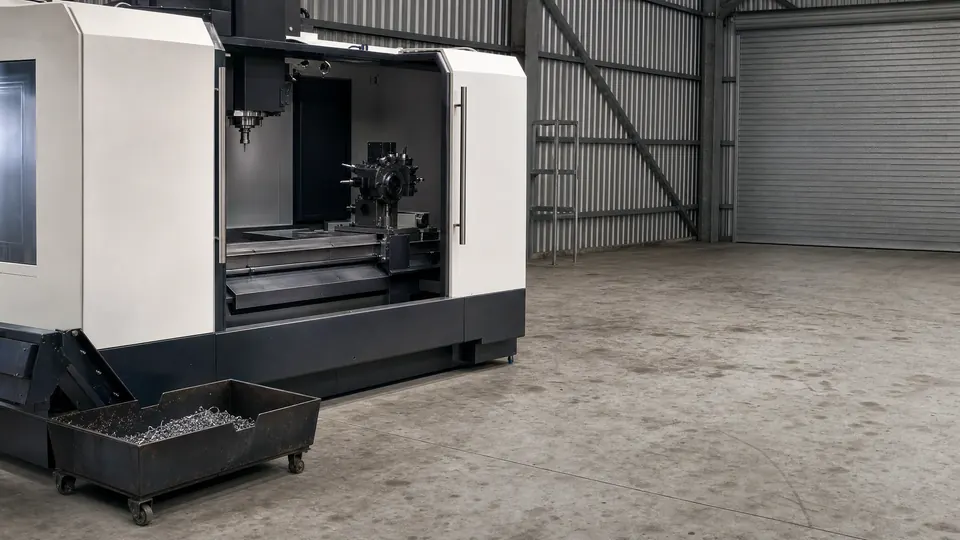
The common first CNC purchase for a New Zealand jobbing shop. The widest used market of anything in this class, which supports the longest terms available here.
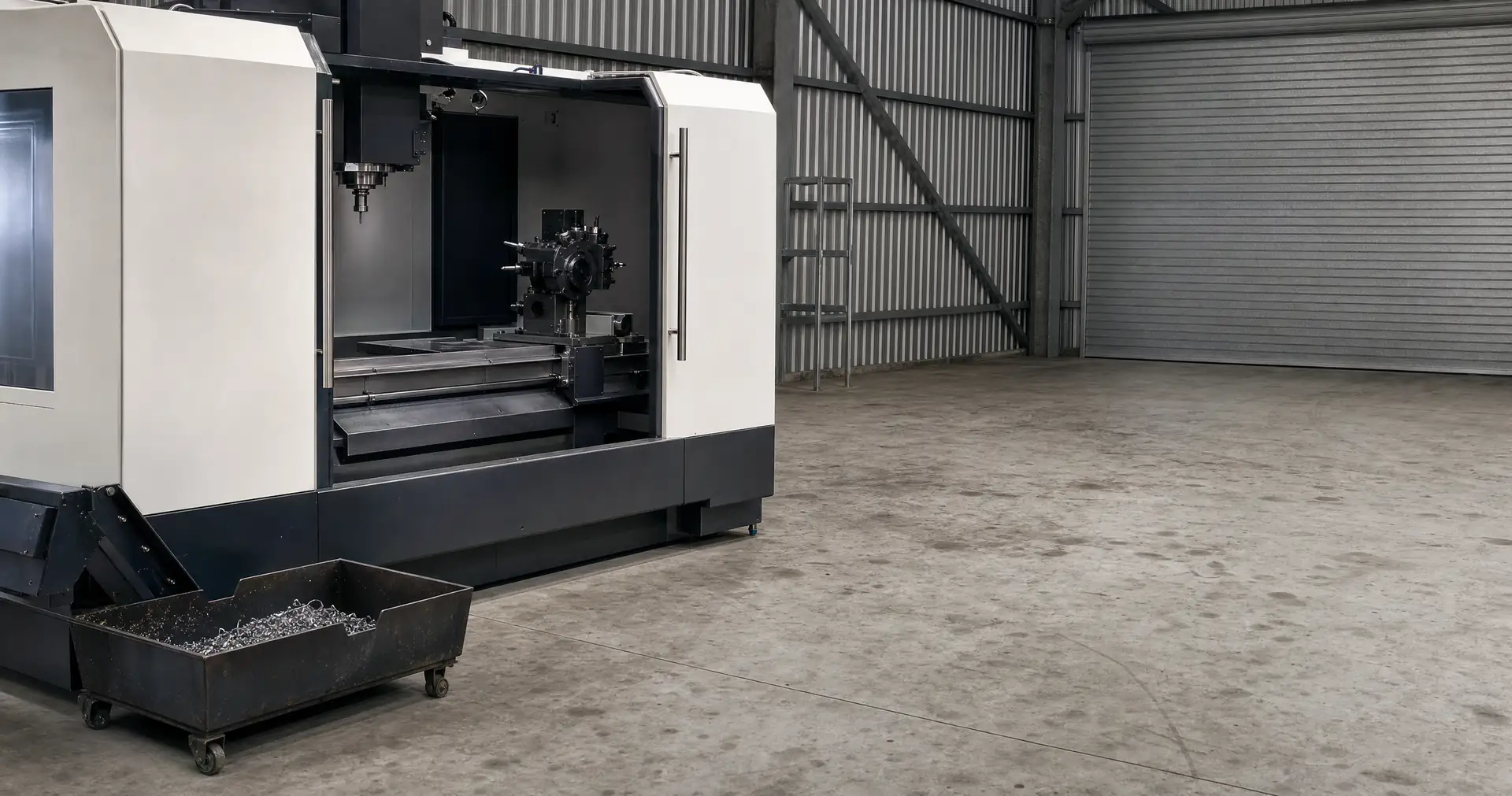
A machining centre is the most productive asset a small engineering business will ever buy and the hardest one for a lender to resell, and both of those facts show up in the terms offered.
Last reviewed 7 September 2026
Indicative repayment
Weekly
$903/week
Indicative only. Not a quote or offer of credit. Actual rates, fees, and repayments depend on the business profile and the lender's decision.
Sending to Prospa
5 years at 11.00% . Prospa will ask a few quick questions, then provide a firm quote and funding if eligible.
Redirecting…
The short version
What it is
Machine tool finance is a secured facility over an identified machine, with the lender registering a security interest on the Personal Property Securities Register. The mechanics are the same as any other equipment facility, and the pricing is not, because the security is worth less to a lender here than the invoice implies.
The reason is the size of the market. A machining centre is a durable asset with a working life measured in decades, but the pool of New Zealand buyers who need that specific configuration, have the floor space, the three-phase capacity and the operators to run it, is small. A lender pricing the downside is asking how quickly it could sell the machine and for how much, and on specialised production plant the honest answers are slowly and for less. That is what produces shorter terms and larger deposits than a comparably priced excavator attracts.
What gets financed is the whole installed capability rather than the machine alone. Rigging and craneage, foundation or floor work, three-phase electrical supply, commissioning, the initial tooling and workholding package, and control software licences are all commonly written into the same agreement where they form part of the same purchase. Consumables and ongoing software subscriptions are not, and businesses commonly budget those against the operating account.
Typical working life
15 to 25 years
Indicative rate band
9% to 16% p.a.
Deposit commonly sought
10% to 25%
Registered on
PPSR
By machine type
Indicative New Zealand purchase bands, illustrative only. Age, control generation, axis count, capacity, tooling and whether the machine is new or a used import all move these considerably. A supplier quote decides an actual purchase.
The common first CNC purchase for a New Zealand jobbing shop. The widest used market of anything in this class, which supports the longest terms available here.
Three-axis milling for general engineering. Broad demand and a reasonable used market, and the class most commonly financed on a five-year term.
High-value production work. Very few New Zealand buyers for any given configuration, so deposits are larger and terms shorter regardless of the machine’s condition.
Sheet metal fabrication. Durable, mechanically simple relative to a machining centre, and consequently easier for a lender to value.
Profile cutting. Source and resonator life are assessed separately from the frame, because they are the expensive part to replace.
Toolroom and repair work. Long lives, simple construction and steady demand keep values stable across very long ownership periods.
Holders, chucks, vices, probes and cutting tools. Financed on the same schedule as the machine where bought together, and a large share of a first purchase.
Rigging, foundations, three-phase supply, setup and operator training. Real costs that are commonly written into the same facility rather than absorbed from working capital.
The common case
The real question
A machining centre financed over five years and run one shift a day is an expensive way to do work that could have been subcontracted. The same machine running two shifts, or running unattended overnight on a pallet changer, is a different business entirely. The gap between those two outcomes dwarfs anything the interest rate does, and it is decided before the finance application rather than by it.
That is why the useful preparation for a machine tool purchase is a utilisation plan rather than a rate comparison. How many hours a week does the existing work fill, what is currently being subcontracted that could come back in-house, and what does the machine need to bill to cover the repayment and the operator. Those three numbers settle the decision, and they are also what a lender is trying to get at when it asks what the machine is for.
The corollary is worth stating plainly. Where the honest answer is that the machine will run a few hours a week, subcontracting the work commonly costs less across a year and carries no commitment. That is not a reason not to buy; it is a reason to buy later, when the volume justifies it.
Tax and GST
Under a hire purchase, a GST-registered business is generally able to claim the GST on the full purchase price in the return covering the period the agreement begins rather than spreading it across the payments, subject to the accountant’s confirmation of the accounting basis used. Under an operating lease the GST is typically claimed on each rental as it is invoiced, again subject to the accountant’s confirmation. Depreciation follows ownership in the same way. Inland Revenue publishes the applicable rates for plant and machinery in its depreciation rate finder, and which category a particular machine and its tooling fall into is a question the accountant is the right person to settle before the documents are signed.
Indicative bands
Indicative bands only, and not an offer of credit. Unusually for this site, the driver here is how many New Zealand buyers exist for the machine rather than how old it is.
| Machine profile | Typical maximum term | Deposit commonly sought | Notes |
|---|---|---|---|
| New, general purpose | 60 months | 10% to 15% | Widest lender pool. Supplier finance programmes commonly compete here. |
| Used, general purpose | 48 to 60 months | 15% to 20% | Manual machines and two-axis lathes sit here. Values are stable and lenders are comfortable. |
| New, specialised | 36 to 48 months | 20% to 25% | Five-axis and multi-tasking machines. The invoice is large and the New Zealand buyer pool is small. |
| Used, specialised | 24 to 36 months | 25% or more | Configuration matters more than condition. A machine built around one customer’s part is hardest of all to place. |
| Imported used, no local support | Case by case | Often 30%+ | Absence of a New Zealand service agent materially reduces what a lender believes it could recover. |
Indicative New Zealand market bands for machine tool finance. Illustrative, not an offer.
The alternatives
Businesses prioritising capability and control typically finance. Businesses prioritising flexibility while volume is unproven typically subcontract. The right answer follows the utilisation plan.
| Feature | Hire purchase | Finance lease | Subcontract the work | Used, bought outright |
|---|---|---|---|---|
| Who owns it | The business | The financier | The subcontractor | The business |
| Upfront cash | Deposit | Often smaller | None | Full price |
| Cost when idle | Full payment | Full payment | None | Depreciation only |
| Operator required | Yes | Yes | No | Yes |
| Control of lead times | Full | Full | None | Full |
| Fits when | Volume is proven | Replacement runs on a cycle | Volume is unproven | Cash has no better use and the machine is simple |
Subcontracting looks expensive per part and frequently is not, because it carries no idle cost, no operator and no commitment. Where the volume is not yet there, it is commonly the cheaper answer for another year.
The process
Written as an observation of what commonly happens rather than as instructions. Every lender differs, and none of this is a guarantee of an outcome.
01
Depends on the supplier, commonly 1 to 2 weeks
Because installation is a real cost, the quote that opens the file usually covers the machine, the tooling package, rigging, any electrical or foundation work and commissioning. Splitting those across separate invoices commonly means only the machine gets financed and the rest lands on working capital.
Documents commonly required
02
5 to 15 working days
Trading history matters as it does everywhere, and here lenders commonly also ask what the machine is for. Existing contracts, work currently being subcontracted out, and the shift pattern planned are all things a credit team will ask about, because they are what turns a large facility into a serviceable one.
Documents commonly required
03
1 to 2 weeks
On used machines and on specialised new ones, lenders commonly seek an independent view of what the machine would fetch in New Zealand rather than what it cost. The presence of a local service agent is part of that assessment, because a machine nobody here can support is harder to place.
Documents commonly required
04
Aligned to delivery, commonly 4 to 16 weeks from order
On imported machines settlement is frequently staged, with a deposit on order and the balance on delivery or commissioning, and the finance agreement reflects that timing. The financier registers its security interest on the PPSR and the first payment commonly falls a month after final settlement rather than after the order.
Documents commonly required
Lead times on new machine tools are frequently months rather than weeks. Where the finance offer has an expiry and the machine has a delivery date beyond it, that gap is worth resolving at the offer stage rather than discovering at delivery.
Worked scenarios
Illustrative scenarios on stated assumptions. The figures are indicative and are produced by the calculator on this page rather than quoted by any lender.
Eight years trading, first CNC machining centre
The shop has been subcontracting milling work for two years and the spend has become predictable. A new three-axis vertical machining centre is quoted at $215,000 plus GST including tooling, rigging and commissioning.
On these assumptions a 60-month hire purchase at an indicative 11% carries a repayment near $1,080 a week. The subcontract spend being brought back in-house covers a large part of that before any new work is won, which is the comparison that makes the case. The tooling package sits on the same schedule rather than coming out of working capital.
Indicative figures
Replacing a manual brake with a CNC press brake
The business is quoted $165,000 plus GST for a CNC press brake to replace a manual machine that limits what it can quote on.
Press brakes are mechanically simpler than machining centres and hold value better in the New Zealand market, so in this scenario the deposit sought is at the lower end and the term runs the full five years. The old machine has no finance on it and is sold privately, with the proceeds applied as the deposit.
Indicative figures
Adding five-axis capability against one large customer
A five-axis machining centre configured around one customer’s components is quoted at $520,000 plus GST.
In this scenario the specialisation that makes the machine valuable to the business is what makes it difficult for the lender, because very few New Zealand buyers would want that configuration. A 25% deposit and a 42-month term are sought, which raises the weekly figure considerably against a five-year term on a general-purpose machine. The concentration on one customer is the risk the business is carrying, and it is the same risk the lender is pricing.
Indicative figures
If it goes wrong
Asset finance is secured, and on this class the recovery position is weaker for the lender than on mobile plant. Set out here as fact rather than as a warning.
The financier registered its interest on the PPSR at settlement and has a defined statutory route to take possession under the Personal Property Securities Act 1999. Recovering a machining centre is physically harder than recovering a vehicle, because it involves rigging, disconnection and transport.
What happens:The machine is removed and the business loses the capability it was built around.
A specialised machine sold under pressure into a small market frequently realises well below its book value, and the recovery cost is subtracted from what it does realise. The difference between the sale proceeds and the balance owing commonly remains payable by the business and by any guarantor.
What happens:A residual debt survives, and is typically larger than on mobile plant.
Machines bought around a single customer’s work are exposed to that customer. Where the contract ends, the machine is still there, still specialised and still being paid for. This is the most common way a well-priced machine tool facility becomes a problem, and it is a business risk rather than a finance one.
What happens:Losing one customer can make an otherwise sound facility unserviceable.
Where a contract ends or volumes fall, lenders are commonly willing to discuss restructuring before arrears build. On this class in particular, an early conversation has materially more options than a late one, because the recovery outcome is poor for both sides.
Honest assessment
The market
Editorial only. These are the kinds of lender active in this class, listed to describe the market rather than to recommend any of them. We hold no relationship with the lenders named here.
Best for established manufacturers
Typically the sharpest indicative pricing and the most documentation. Most comfortable where financial statements show consistent capacity to service the facility.
Best for used and imported machines
Non-bank financiers who will take a view on a machine a bank will not, at an indicative rate above bank pricing and commonly with a larger deposit.
Best for new machines with installation
New Zealand distributors frequently arrange finance covering the installed package including tooling and commissioning, which is harder to assemble elsewhere.
Best for unproven volume
Not lenders. Where the utilisation case is not yet there, subcontracting the work carries no commitment and is commonly the cheaper answer for another year.
Names are deliberately generic. A comparison of specific lenders would need current pricing we cannot substantiate, and publishing it would be a claim rather than information.
Test the maths
Pre-filled with an installed machining centre package over five years. The number that matters is what the machine has to bill each week to cover this. Indicative only, and not a quote or offer of credit.
Indicative repayment
Weekly
$903/week
Indicative only. Not a quote or offer of credit. Actual rates, fees, and repayments depend on the business profile and the lender's decision.
Sending to Prospa
5 years at 11.00% . Prospa will ask a few quick questions, then provide a firm quote and funding if eligible.
Redirecting…
References
The register on which a security interest over a machine is recorded.
The statutory basis for the enforcement route set out in the default section.
The published source for the depreciation treatment referred to on this page.
The published source for the GST treatment referred to on this page.
Backs the reference to guarding, extraction and operator obligations sitting outside the finance agreement.
Context for the description of the New Zealand engineering and manufacturing base.
FAQ
It is a secured facility taken over an identified machine, with the machine and commonly its tooling carrying the security. The lender registers its interest on the Personal Property Securities Register and the business has use of the machine from commissioning. Pricing sits at the higher end of the asset finance range because the New Zealand resale market for production plant is small.
Because the security is worth less to a lender than the invoice suggests. A specialised machining centre has few New Zealand buyers, takes longer to sell and realises less under pressure than mobile plant of the same price. A deposit reduces the lender’s exposure to that gap, which is why it is sought more often here.
Commonly yes, where they form part of the same purchase. Rigging, foundation or floor work, three-phase supply, commissioning and initial operator training are frequently written into the same facility. Splitting them across separate invoices often means only the machine gets financed and the rest lands on working capital.
Usually, where it is bought at the same time. Holders, chucks, vices, probes and the initial cutting tool package are commonly listed on the same schedule. On a first machining centre the tooling is frequently a quarter of the total, which is a large amount to absorb from working capital on top of a deposit.
Terms of 36 to 60 months cover most of this class. General-purpose machines with broad demand reach the longer end. Specialised configurations are commonly capped shorter, because the term a lender will run is set against how quickly the machine could be sold rather than against how long it will work.
It commonly does. A machine with no New Zealand service support is harder to keep running and harder to sell, and lenders factor both into what they believe they could recover. An imported used machine with no local agent frequently attracts a shorter term and a larger deposit than the same machine with support behind it.
Under a hire purchase, a GST-registered business is generally able to claim the GST on the full purchase price in the return covering the period the agreement begins rather than spreading it across the payments, subject to the accountant’s confirmation of the accounting basis used. Under an operating lease the GST is typically claimed on each rental as it is invoiced, again subject to the accountant’s confirmation.
Settlement is frequently staged, with a deposit on order and the balance on delivery or commissioning, and the finance agreement is written to match that timing. The first repayment commonly falls a month after final settlement rather than after the order, which matters when lead times run to several months.
Until the volume is there, commonly yes. Subcontracting carries no idle cost, no operator and no commitment, and it can stop. Once the subcontract spend is predictable and large enough to cover a repayment before any new work is won, the arithmetic reverses. That crossover is specific to the shop rather than a general figure.
The machine remains, the specialisation remains, and the repayments remain. This is the most common way a well-priced machine tool facility becomes a problem, and it is a business risk rather than a finance one. Lenders are commonly willing to discuss restructuring where it is raised before arrears build.
Yes, and a substantial share of New Zealand machine tool finance is written against used equipment. Terms are shorter and deposits larger, and lenders commonly seek an independent view of what the machine would fetch here rather than relying on the purchase price. A PPSR search is standard on any used purchase.
Frequently. Floor loading, three-phase capacity, compressed air, extraction and access for rigging are all real requirements that are easy to discover late. Where they need work, that cost is worth quoting before the finance is arranged, because it can commonly be included in the same facility and is expensive to fund separately afterwards.
Related
Printing and signage equipment finance
The same specialisation problem in a different workshop.
Read onForklift finance
How material moves around a workshop, and how that is funded.
Read onManufacturing equipment finance
How New Zealand production businesses approach equipment as a sector.
Read onWhat equipment lenders assess
Why a utilisation plan matters more here than a rate comparison.
Read onPlant and machinery depreciation
How the tax treatment works on long-lived production plant.
Read onAll equipment finance guides
Every machine class covered on this site.
Read onDisclaimer
Financing a machine is a commitment that runs for years, and the repayments come out of the same operating cash flow as everything else. Modelling the weekly and monthly cost against the working-capital position before committing is what this site is built for. Borrowing at a level that stays comfortable through a quiet quarter, rather than only through a strong one, is widely regarded as the safer frame.
What this site is
A calculator and information tool. Not a lender, not a broker, not a registered financial adviser. Nothing here is personalised financial advice.
What the figures show
Modelled estimates based on the inputs shown. Not a quote. Not an offer of credit. Not a guarantee of approval, rate or fees.
What the lender decides
Final rates, fees, and approval are set by the lender after a CCCFA-appropriate assessment of the applicant's circumstances and credit decision.
Commercial disclosure
Equipmentfinance.org.nz earns a commission from Prospa when a visitor applies through this site and their application is approved. The commission is paid by Prospa, not by the borrower, and it does not influence the rate Prospa offers. Full disclosure on the partner page.
Tax, GST, and accountant framing
Tax-treatment statements (GST claim timing, interest deductibility, depreciation rates) are general in nature and subject to the accountant's confirmation on the specific business position. For material amounts, professional advice from a registered financial adviser or chartered accountant is widely regarded as the safer frame.