
Wide-format roll printer
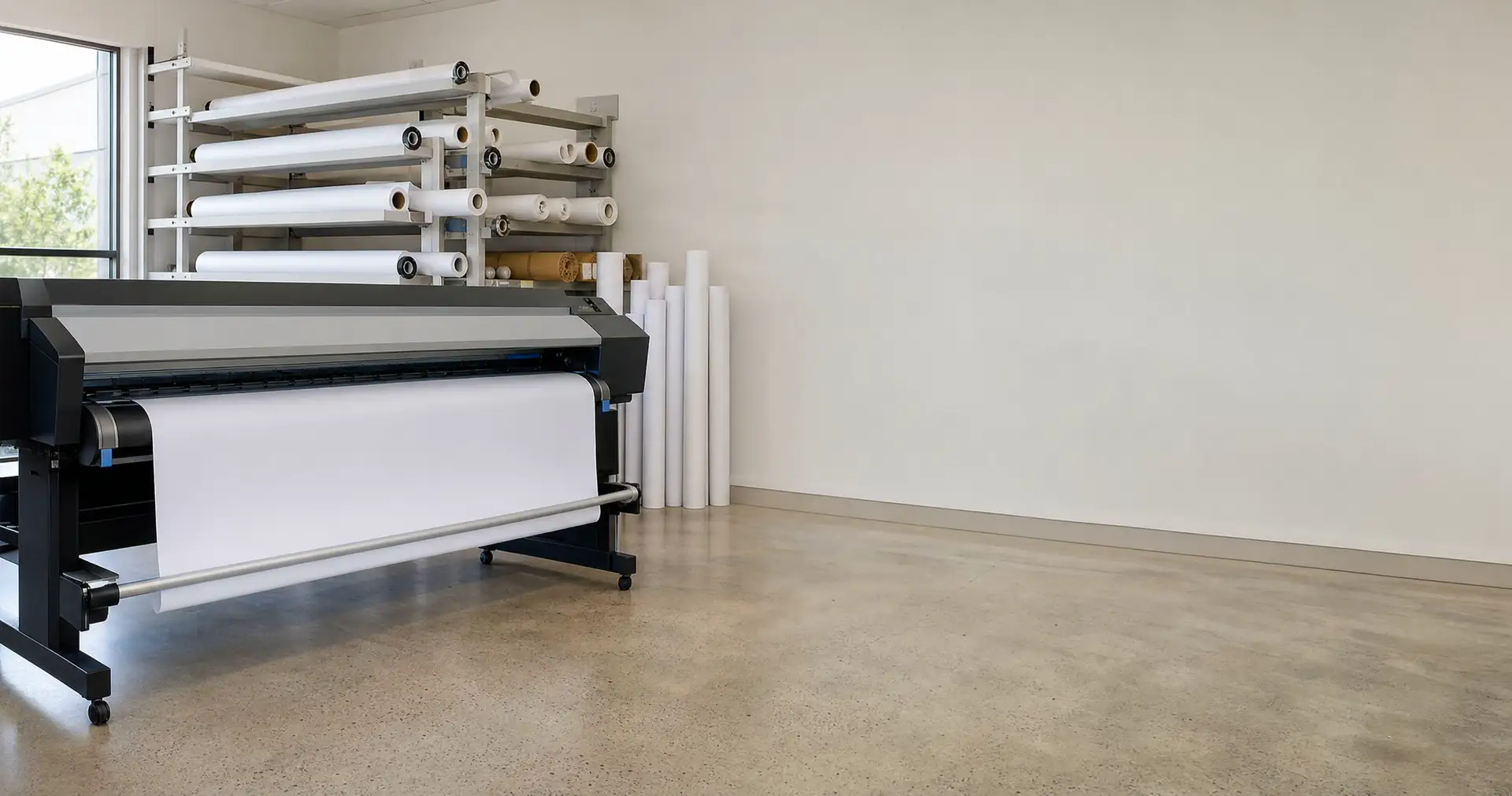
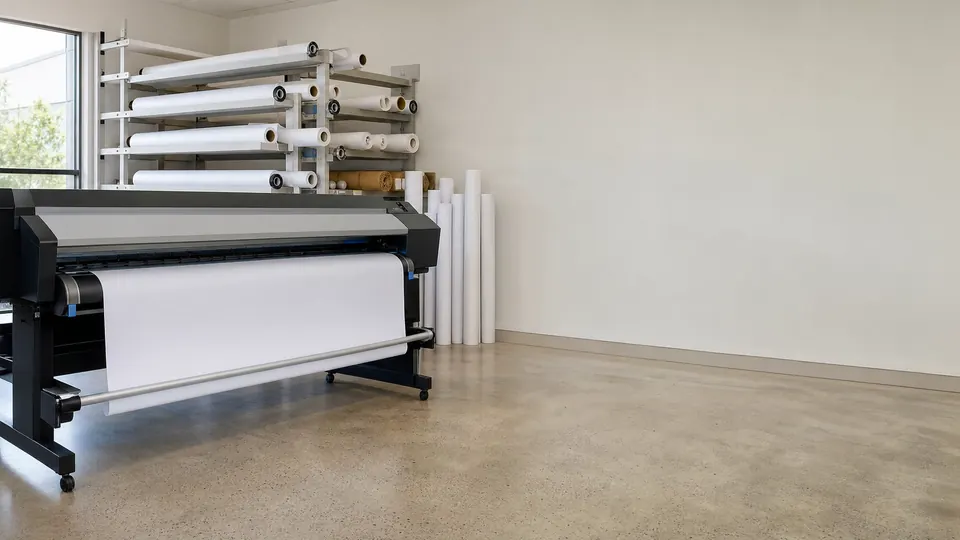
Banners, posters and vehicle graphics. The most commonly financed machine in this class, and the one with the widest New Zealand used market.
Print equipment is unusual in carrying a large recurring cost that has nothing to do with the finance, and businesses that budget only for the repayment are the ones that come unstuck.
Last reviewed 7 September 2026
Indicative repayment
Weekly
$517/week
Indicative only. Not a quote or offer of credit. Actual rates, fees, and repayments depend on the business profile and the lender's decision.
Sending to Prospa
4 years at 12.00% . Prospa will ask a few quick questions, then provide a firm quote and funding if eligible.
Redirecting…
The short version
What it is
Print equipment finance is a secured facility over an identified machine, with the lender registering a security interest on the Personal Property Securities Register. The mechanics are the same as any equipment facility. What is different is that on this class the finance is rarely the whole commitment being entered into.
Most print and signage equipment is sold alongside a service arrangement, and those arrangements vary from a straightforward annual maintenance contract to a click charge that bills per square metre or per impression. That is a separate agreement with its own term, its own minimum volume and its own exit provisions, and it commonly runs longer than a business expects. Reading it as carefully as the finance agreement is worth the time, because the two together are the actual cost of the machine.
The consumables position compounds it. Ink and media scale directly with volume, print heads and UV lamps are consumable items with a defined life and a replacement cost that is a meaningful fraction of the machine, and a busy machine burns through all of them faster. A quote that shows only the finance repayment is showing a minority of the weekly cost.
Common amount
$40k to $150k
Indicative rate band
10% to 18% p.a.
Typical term
36 to 60 months
Registered on
PPSR
By machine type
Indicative New Zealand purchase bands, illustrative only. Width, speed, ink technology, finishing capability and whether the machine is new or used all move these considerably. A supplier quote decides an actual purchase.
Banners, posters and vehicle graphics. The most commonly financed machine in this class, and the one with the widest New Zealand used market.
Rigid substrate printing for signage and display. Large amounts, few New Zealand buyers second-hand, and lamps or LED arrays with their own service life.
Short-run commercial print. Almost always sold with a click-charge service contract, which is a separate commitment running alongside the finance.
Signage and vehicle wrap production. Small amounts, simple machines, and values that hold reasonably well because demand is broad.
Encapsulation, mounting and trimming. Frequently bought alongside a printer and financed on the same schedule where they are one purchase.
Cutting rigid signage substrates. Mechanically closer to a machine tool than to a printer, and valued more like one.
Apparel decoration. A growing New Zealand segment with a small used market, so deposits are commonly sought.
Licensed software and calibration hardware. Financed with the machine where bought together, and frequently subscription-based thereafter, which sits outside the finance.
The common case
The second agreement
Print equipment is frequently sold with a service arrangement signed at the same time, and it is a separate legal commitment. A click charge billing per square metre or per impression commonly carries a minimum monthly volume, which is payable whether or not the machine runs that much. The term can be longer than the finance term, and the exit provisions are frequently stricter. Settling the finance early does not end the service contract, and the two are worth reading together as one commitment rather than separately as two.
Indicative bands
Indicative bands only, and not an offer of credit. Terms here are more conservative than on mechanical plant of the same value, because print technology dates faster.
| Machine profile | Typical maximum term | Deposit commonly sought | Notes |
|---|---|---|---|
| New, mainstream width | 60 months | 0% to 15% | Widest lender pool. Supplier finance programmes are common and often competitive. |
| New, large or specialised | 48 months | 15% to 25% | Flatbed UV and production presses. Large amounts against a small New Zealand buyer pool. |
| Used, under 3 years | 36 to 48 months | 15% to 20% | Print head hours and service history matter more than the calendar age. |
| Used, 3 to 6 years | 24 to 36 months | 20% to 30% | Terms set against remaining technology life. Ink availability for older platforms is a real question. |
| Used, over 6 years | Case by case | Often 30%+ | Frequently declined as asset finance and funded on an unsecured facility instead, at unsecured pricing. |
Indicative New Zealand market bands for print equipment finance. Illustrative, not an offer.
The alternatives
Businesses prioritising margin control and ownership typically finance. Businesses prioritising a single predictable figure typically take an all-inclusive arrangement. The right answer follows expected volume.
| Feature | Hire purchase | Finance lease | All-inclusive contract | Trade-print supplier |
|---|---|---|---|---|
| Who owns it | The business | The financier | The supplier | Not applicable |
| Consumables | The business buys | The business buys | Commonly included | Included in the price |
| Service and parts | Separate contract | Separate contract | Included | Not applicable |
| Cost when quiet | Full payment | Full payment | Minimum volume applies | None |
| Margin on each job | Highest | Highest | Lower | Lowest |
| Fits when | Volume is steady and known | Replacement runs on a cycle | Predictable budgeting matters most | Volume is low or lumpy |
An all-inclusive arrangement removes the surprise of a print head failure and charges for that certainty. Whether it costs more depends on volume and on how the business would have handled the failure, and the comparison is specific to the workshop.
The process
Written as an observation of what commonly happens rather than as instructions. Every lender differs, and none of this is a guarantee of an outcome.
01
Depends on the supplier, commonly 1 to 2 weeks
A quote naming the machine, its configuration, any finishing equipment and the RIP software is what opens the finance file. The service or click-charge proposal usually arrives alongside it and is a separate document, and both are worth having in hand before either is signed.
Documents commonly required
02
2 to 7 working days
Trading history carries the usual weight, and lenders commonly also ask what the machine will run. Current outsourced print spend and the jobs that would move in-house are the figures that make a facility serviceable, and they are what a credit team is trying to establish.
Documents commonly required
03
1 to 5 working days
On used equipment lenders commonly want print head hours and service history rather than just the year, because those are what remaining life actually depends on. A PPSR search runs at the same time on any used purchase.
Documents commonly required
04
1 to 3 working days after acceptance
The financier commonly pays the supplier directly and registers its security interest on the PPSR. Installation and colour calibration usually follow delivery, and the first payment commonly falls a month after settlement.
Documents commonly required
The finance agreement and the service agreement have different terms, different exits and different consequences. Signing them on the same day does not make them one commitment, and the total obligation is the sum of both.
Worked scenarios
Illustrative scenarios on stated assumptions. The figures are indicative and are produced by the calculator on this page rather than quoted by any lender.
Five years trading, first wide-format printer
The business has been outsourcing large-format print for three years and the monthly spend has become steady. A new roll printer with a laminator is quoted at $72,000 plus GST.
On these assumptions a 48-month facility at an indicative 12% carries a repayment near $430 a week. The outsourced spend being displaced covers most of that, and the margin retained on each job is the return. Ink and media are the number the business adds on top, because they scale with the work rather than sitting flat.
Indicative figures
Adding a digital press on a click-charge contract
A digital production press is quoted at $240,000 plus GST, with a click-charge service contract billing per impression and carrying a minimum monthly volume.
In this scenario the finance runs 48 months and the service contract runs 60, which the business notices only because it asks. The practical consequence is that settling the finance early would leave a service commitment still running for another year, and the minimum volume is payable whether the press is busy or not.
Indicative figures
Two years trading, direct-to-garment machine
A direct-to-garment printer is quoted at $58,000 plus GST to bring apparel decoration in-house ahead of a seasonal peak.
The used market for this equipment in New Zealand is thin and the business is under three years old, so in this scenario a 20% deposit is sought and the term is capped at 36 months. The seasonality is the risk the business is carrying, because the repayment is flat across the year while the revenue is not.
Indicative figures
Honest assessment
The market
Editorial only. These are the kinds of lender active in this class, listed to describe the market rather than to recommend any of them. We hold no relationship with the lenders named here.
Best for new machines with service
Print equipment distributors commonly arrange finance alongside the machine and the service contract, which is convenient and bundles two commitments that are worth assessing separately.
Best for used and mixed purchases
Non-bank financiers willing to take a view on used print equipment, which banks are frequently cautious about given how quickly the technology dates.
Best for established print businesses
Typically the sharpest indicative pricing, and usually more comfortable at the larger end of this class than on smaller wide-format purchases.
Best for low or lumpy volume
Not lenders. Where volume does not yet support a machine, trade print carries the equipment cost and charges per job, with no commitment when work is quiet.
Names are deliberately generic. A comparison of specific lenders would need current pricing we cannot substantiate, and publishing it would be a claim rather than information.
Test the maths
Pre-filled with a wide-format package over four years. The honest total adds consumables and the service contract to this figure. Indicative only, and not a quote or offer of credit.
Indicative repayment
Weekly
$517/week
Indicative only. Not a quote or offer of credit. Actual rates, fees, and repayments depend on the business profile and the lender's decision.
Sending to Prospa
4 years at 12.00% . Prospa will ask a few quick questions, then provide a firm quote and funding if eligible.
Redirecting…
References
The register on which a security interest over the machine is recorded.
The statutory basis for the security position described on this page.
The published source for the depreciation treatment referred to on this page.
The published source for the GST treatment referred to on this page.
Backs the note that a service or click-charge agreement is a separate commitment with its own terms.
FAQ
It is a secured facility taken over an identified machine, with the printer or finishing equipment carrying the security. The lender registers its interest on the Personal Property Securities Register and the business has use of the machine from installation. Pricing sits toward the higher end of the asset finance range because print technology dates faster than mechanical plant.
No. A service or click-charge arrangement is a separate legal commitment with its own term, its own minimum volume and its own exit provisions, even where it is signed on the same day. Settling the finance early does not end it, and the two together are the real cost of the machine.
It is a service arrangement that bills per impression or per square metre printed rather than as a flat fee, commonly with a minimum monthly volume that is payable whether the machine runs that much or not. It typically covers parts, labour and sometimes consumables, and it is a distinct agreement from the finance.
Enough that they change the decision. Ink and media scale directly with volume, and print heads and UV lamps are consumable items with a defined life and a replacement cost that is a meaningful fraction of the machine. On a busy machine the consumables bill commonly exceeds the finance repayment, which is why budgeting for the repayment alone understates the commitment.
Because the technology moves. A five-year-old press brake does the same job it always did, while a five-year-old print platform can be genuinely outclassed on speed, quality or ink cost. Lenders set terms against how long the machine will hold value rather than how long it will physically run.
Yes, though the pool of willing lenders is smaller than on mechanical plant. Print head hours and service history matter more than the calendar age, and ink availability for older platforms is a real question. Above roughly six years, funding commonly moves to an unsecured business facility instead.
Often, particularly on larger machines and on used equipment. The New Zealand used market for wide-format and digital press equipment is small, and a deposit reduces the lender’s exposure to the gap between what a machine cost and what it would realise. Nil-deposit facilities are more common on mainstream new machines.
Where they are bought outright with the machine, commonly yes, and they usually sit on the same schedule. Subscription-based software is a recurring cost rather than a purchase and sits outside the finance, alongside the consumables.
Under a hire purchase, a GST-registered business is generally able to claim the GST on the full purchase price in the return covering the period the agreement begins rather than across the payments, subject to the accountant’s confirmation of the accounting basis used. Under an operating lease the GST is typically claimed on each rental as it is invoiced, again subject to the accountant’s confirmation.
Where volume is low or lumpy, commonly yes, because a trade supplier carries the machine cost, the consumables and the idle time and charges per job. The crossover comes when outsourced spend is steady enough to cover the repayment and the running costs, and the margin retained on each job then becomes the return.
It is a consumable item with a defined life and a replacement cost that is a meaningful fraction of the machine, and it sits outside the finance agreement. Whether it also sits outside the service agreement depends on that contract, which is one of the specific things worth checking in it before signing.
It can, and the repayment is flat while the revenue is not, so the quiet months are the ones that decide it. A business with a strong peak and a thin off-season is carrying that mismatch itself unless a lender offers a seasonal structure, which is less common in this class than in rural lending.
Related
CNC and machine tool finance
The same specialisation problem, on mechanical rather than digital plant.
Read onIT and technology finance
The other class where technology life decides the term.
Read onManufacturing equipment finance
How New Zealand production businesses approach equipment as a sector.
Read onWhat equipment lenders assess
What a lender wants to know about volume before writing a facility.
Read onEnd of term and upgrade options
How replacement cycles work when technology moves faster than the term.
Read onAll equipment finance guides
Every machine class covered on this site.
Read onDisclaimer
Financing a machine is a commitment that runs for years, and the repayments come out of the same operating cash flow as everything else. Modelling the weekly and monthly cost against the working-capital position before committing is what this site is built for. Borrowing at a level that stays comfortable through a quiet quarter, rather than only through a strong one, is widely regarded as the safer frame.
What this site is
A calculator and information tool. Not a lender, not a broker, not a registered financial adviser. Nothing here is personalised financial advice.
What the figures show
Modelled estimates based on the inputs shown. Not a quote. Not an offer of credit. Not a guarantee of approval, rate or fees.
What the lender decides
Final rates, fees, and approval are set by the lender after a CCCFA-appropriate assessment of the applicant's circumstances and credit decision.
Commercial disclosure
Equipmentfinance.org.nz earns a commission from Prospa when a visitor applies through this site and their application is approved. The commission is paid by Prospa, not by the borrower, and it does not influence the rate Prospa offers. Full disclosure on the partner page.
Tax, GST, and accountant framing
Tax-treatment statements (GST claim timing, interest deductibility, depreciation rates) are general in nature and subject to the accountant's confirmation on the specific business position. For material amounts, professional advice from a registered financial adviser or chartered accountant is widely regarded as the safer frame.